 0
0
 0
0
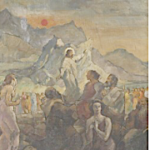
Illustration: Church of the Holy Sepulchre where tradition claims Jesus was crucified and died
Pope Leo’s message for Lent 2026
“Listening and Fasting: – Lent as a Time of Conversion
Dear brothers and sisters,
During Lent, the Church invites us to put the mystery of God back at the center of our lives. Guided by a sense of maternal care, the Church encourages us to renew our faith and keep our hearts from being consumed by the anxieties and distractions of daily life.
Every journey of conversion begins when we allow the Word of God to touch our hearts and accept it with a docile spirit.
There is a relationship between the Word, our acceptance of it, and the transformation it brings about.
For this reason, Lent is an opportunity to heed the voice of the Lord and renew our commitment to follow Christ as he journeys to Jerusalem, where the mystery of his passion, death, and resurrection is fulfilled.
Listening
Above all, I would like to emphasize the importance of making space for the Word through listening this year.
The willingness to listen is the first sign of the desire to form a relationship with another person.
In revealing himself to Moses in the burning bush, God shows that listening is a characteristic of his being: “I have observed the misery of my people in Egypt. I have heard their cry” (Exodus 3:7).
Listening to the cries of the oppressed marks the beginning of a liberation story, in which the Lord involves Moses by sending him to lead his enslaved children to salvation.
Even today, God shares what is in his heart with us.
Because of this, listening to the Word in the liturgy teaches us to listen to the truth of reality.
Sacred Scripture enables us to recognize the cries arising from suffering and injustice so that they do not go unanswered amid the many voices in our personal lives and society.
To foster this inner openness to listening, we must allow God to teach us how to listen as he did, recognizing that “the fate of the poor is a cry that, throughout history, constantly demands a response from our lives, our societies, our political and economic systems, and, last but not least, the Church.”
Fasting
If Lent is a time for listening, then fasting is a concrete way to prepare to receive the Word of God. Abstaining from food is an ancient ascetic practice that is essential to conversion.
Because it involves the body, fasting helps us to recognize what we “hunger” for and what we deem necessary for our sustenance.
It also helps us identify and manage our desires, keeping our hunger and thirst for justice alive and freeing us from complacency.
Thus, fasting teaches us to pray and act responsibly toward our neighbors.
With his spiritual insight, St. Augustine helps us to understand the tension between the present moment and the future fulfillment that characterizes this custody of the heart.
In The Usefulness of Fasting, 1, 1), he observes (that: “In the course of earthly life, it is incumbent upon men and women to hunger and thirst for justice, but to be satisfied belongs to the next life. Angels are satisfied with this bread, this food. The human race, on the other hand, hungers for it; we are all drawn to it in our desire.
This reaching out in desire expands the soul and increases its capacity.”
In this sense, fasting enables us to discipline, purify, and expand our desires so that they turn to God and are directed towards doing good.
However, to preserve its evangelical truth and avoid pride, fasting must be practiced with faith and humility. It must be grounded in communion with the Lord because those who cannot nourish themselves with the Word of God do not fast properly.
As a visible sign of our commitment to turning away from sin and evil with the help of grace, fasting should also include other forms of self-denial that help us acquire a more sober lifestyle. After all, “asceticism alone makes the Christian life strong and authentic.”
In this regard, I would like to invite you to a practical form of abstinence that is often overlooked: refraining from offensive and hurtful words.
Let us start by choosing our words carefully. Avoid harsh words and rash judgments. Refrain from slander and speaking ill of those who are not present and cannot defend themselves.
Instead, let us strive to choose our words carefully and cultivate kindness and respect among our families, friends, coworkers, social media followers, political debate partners, media outlets, and Christian communities.
In this way, words of hatred will give way to words of hope and peace.
Listening to the word and fasting Together
Finally, Lent emphasizes the communal aspects of listening to the Word and practicing fasting.
Scripture also emphasizes this aspect in many ways.
For instance, the Book of Nehemiah describes how the people gathered to listen to the public reading of the Book of the Law and by practicing fasting, prepared themselves to confess faith and worship in order to renew their covenant with God
(Nehemiah 9:1-3 – Now on the twenty-fourth day of this month the people of Israel were assembled with fasting and in sackcloth, and with earth upon their heads. 2 And the Israelites separated themselves from all foreigners, and stood and confessed their sins and the iniquities of their fathers. 3 And they stood up in their place and read from the book of the law of the Lord their God for a fourth of the day; for another fourth of it they made confession and worshiped the Lord their God.
Similarly, during Lent, our parishes, families, ecclesial groups and religious communities are called to undertake a shared journey.
This journey involves listening to the word of God, as well as to the cries of the poor and of the earth, Fasting becomes a foundation for sincere repentance, and listening to the Word of God and the cries of the poor and the Earth becomes part of our community life.
In this context, conversion refers not only to one’s conscience, but also to the quality of our relationships and dialogue.
It means allowing ourselves to be challenged by reality and recognizing what truly guides our desires — both within our ecclesial communities and as regards humanity’s thirst for justice and reconciliation.
Dear friends,
Let us ask for the grace to experience a Lent that leads us to greater attentiveness to God and to those who are least among us.
Let us ask for the power of fasting to touch our tongues, so that fewer hurtful words are spoken and more space is made for others to be heard.
Let us strive to make our communities places where those who suffer are welcomed and where listening opens paths toward liberation. This will make us ready and eager to contribute to building a civilization of love.
I impart my heartfelt blessing upon all of you and your Lenten journey.
LEO PP. XIV