 0
0
 0
0
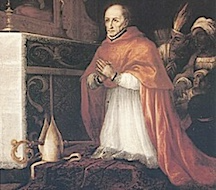
Pope Leo’s letter to the bishops of Latin America and the Caribbean
on the occasion of the 3rd centenary of the canonization of Saint Turibius of Mogrovejo
Dear brothers in the Episcopate,
In response to the request of the bishops of Peru and in honor of the third centenary of the canonization of St. Turibius de Mogrovejo, the patron saint of Latin American bishops, I greet you warmly in the Lord and thank you for your daily service.
As I write this, I am once again filled with gratitude for the privilege of exercising episcopal ministry in Peru.
There, I got to know the faith of a people who gave me so much, and I came to understand better what it means to be a shepherd.
This experience brought me particularly close to St. Turibius, who also came from afar and made the land his own through pastoral charity.
My predecessors have spoken at length about St. Turibius, the “illustrious Metropolitan of Lima,” recalling his zeal for evangelization, his dedication to building up and renewing ecclesial life, and his connection with the poorest and most vulnerable.
Without revisiting his biography, I would like to reflect on his ministry in light of a ritual pointing us to the origin of our mission: welcoming the bishop into his cathedral church.
A similar rite is prescribed for a pastoral visit to a community, as if the Church wished to remind the prelate of the significance of that initial entry.
The liturgy expresses this meaning through a few gestures, which the Apostle of the Andes embodied throughout his years as a shepherd.
The best way to honor his memory is to allow ourselves to be challenged by the way he lived out the ministry we have also received and to imitate him.
The rite begins at the cathedral door.
There, the Church welcomes the new bishop to the community to which he has been sent. He arrives in a community that predates him—one that has journeyed along a path of faith, in which the Holy Spirit was already at work.
As he crosses the threshold, he enters a history that did not begin with him and becomes, through his ministry, bound to a specific people.
St. Turibius arrived in a land whose peoples and customs were largely unknown to him.
To shepherd them, he immersed himself in the culture by traveling throughout the region. His pastoral visits and his desire for the Gospel to be proclaimed in the local languages gradually strengthened his bond with the land and its people.
It is difficult to understand certain aspects of a diocese from behind a desk.
For this reason, we must ensure that pastoral visits retain their vitality.
Let us go out personally to meet our communities, listen to our flock, and seek out those who seldom have the opportunity to approach the bishop.
The ministry of a successor to the apostles requires us to live with our hearts in heaven and our feet on the road.
The bishop remains standing at the door and receives a crucifix, which he kisses.
The church places before him the one who loved his own to the very end.
This gesture promises self-sacrifice.
His ministry may lead him down unexpected paths and require sacrifices he could never have imagined.
The cross reminds him that he must remain with the flock during difficult times and that protecting the sheep may come at a price for the shepherd himself.
Turibius extended that kiss to the suffering body of the Lord through his travels and hardships as he defended indigenous peoples, corrected abuses, and remained close to the poor and suffering.
Dear brothers, we need to frequently return to the school of the Cross.
Abandoning the flock begins long before any visible flight when comfort, fear, or self-interest take precedence over the well-being of the faithful.
The hired hand calculates what he might lose, but the shepherd knows he must sacrifice to remain faithful. (John 10:12–13 – He who is a hireling and not a shepherd, whose own the sheep are not, sees the wolf coming and leaves the sheep and flees; and the wolf snatches them and scatters them. 13 He flees because he is a hireling and cares nothing for the sheep.).
Next, the bishop receives the holy water and sprinkles himself and those present. This gesture reminds him of the common source of baptism.
Before he is a shepherd, he is a disciple. Before he presides over the People of God, he considers himself one of the baptized, who are made children of Christ.
A shepherd’s holiness cannot be taken for granted (cf. 1 Tim. 4:16).
Saint Turibius was able to call for a more Gospel-faithful ecclesial life because he began by holding himself to that standard.
Those entrusted with sanctifying others still need to be sanctified themselves, and those who proclaim mercy must also live by it.
Therefore, let us nurture our interior lives and remain aware that we are disciples in need of conversion.
The rite then leads the bishop to the tabernacle, where he kneels and worships.
Before beginning his ministry, he pauses in silence before the Blessed Sacrament. Bishops come and go, but Christ always remains (cf. Heb. 13:8).
Pastors change, new challenges arise, and projects unfold, but the Church lives in the Lord. For this reason, I invite you to make Eucharistic adoration a pastoral priority. Turibius’s love for the Eucharist was evident in his commitment to bringing people closer to Jesus.
Let us give our faithful the time and space to stand before Him and encourage prolonged adoration.
I am convinced that welcoming and adoring the Lord’s holy presence sustains what our own strength cannot achieve and opens paths that no plan can conceive. It is his love that will transform our dioceses.
After vesting, the bishop approaches the altar and kisses it. He has just knelt before the Lord, who is now considered to gather his Church around himself and make it one body (cf. 1 Cor 10:17).
St. Turibius served a vast and diverse church and strove to keep it united.
We are also responsible for ensuring that the diversity of our dioceses finds unity in Christ. The altar reminds us that communion lies at the heart of our mission.
He then goes to the cathedra, where the apostolic letter is read—the papal bull by which the Roman pontiff appointed him shepherd of that particular church.
The bishop has not given himself this mission. Rather, he has received it and exercises it in communion with the Church, united with the Successor of Peter and the College of Bishops.
The teaching he offers from the cathedra does not derive from his own words that must be imposed.
He has received the faith of the Church and is called to “guard the good treasure,” delve deeper into it, and make it understandable to those entrusted to his care
(2 Tim. 1:13–14 – Follow the pattern of the sound words which you have heard from me, in the faith and love which are in Christ Jesus; 14 guard the truth that has been entrusted to you by the Holy Spirit who dwells within us.).
Saint Turibius understood this responsibility well.
His reception of the Council of Trent, provincial councils, diocesan synods, and catechetical work bear witness to his desire to transmit the faith in its entirety and make it accessible to his flock.
In an era of competing voices vying for the allegiance of the faithful, it is the bishop’s duty to provide clear, patient, and communion-rooted teachings to help his flock recognize the voice of the one Shepherd.
Then, the clergy and the faithful approach him to “show obedience and reverence.”
The reverence received becomes a responsibility for the bishop, and the obedience offered demands a fatherly heart from him.
This is especially apparent in his relationship with the priests, who are united with him in a unique way through the priesthood and the mission entrusted to the particular church.
Turibius provided for their formation, was exacting when admitting them to Holy Orders, visited his priests, and upheld ecclesiastical discipline.
He was mindful that the lives of the clergy impact those of the people.
Dear brothers, let us support our priests.
Let us take particular care of the seminary and the first years of ministry. Let us foster genuine brotherhood and ensure that no priest feels he can only approach his bishop when there is a problem to be resolved.
A bishop’s paternal role is often recognized when a priest knows he can confidently knock on the bishop’s door.
After the Gospel reading, the bishop addresses his congregation for the first time.
Up to this point, the liturgy has encouraged him to be open and listen, leading him into a time of silent adoration.
Only now does he speak.
This simple order contains a lesson we should always keep in mind.
Amidst our many daily duties, we are called to proclaim the Good News.
Like the apostles, we are called to devote ourselves “to prayer and to serving the word” (Acts 6:4).
Saint Turibius made his life a continuous act of preaching, and his message was credible because he had allowed the Gospel to shape his existence.
No urgency or pastoral task, no matter how necessary, should cause us to neglect prayer, which is necessary for preparing to preach.
We must always set aside time to listen to the Word and consider how to present it to our people.
After the introductory rites and the Liturgy of the Word, it is time to present the offering.
During the Offertory, we see a preview of what the bishop will offer to the Lord day after day: his work, his projects, his decisions, the people entrusted to him, his concerns, and his hopes.
There will be times when he clearly sees the path, and times when he experiences his own smallness. All of this can be placed on the paten.
The bishop must faithfully give himself; ultimately, the fruit belongs to God
( 1 Cor. 3:6-7 – I planted, Apollos watered, but God gave the growth.
So neither he who plants nor he who waters is anything, but only God who gives the growth.).
The celebration itself reveals the source of this fruitfulness.
During the Holy Mass, Christ’s single sacrifice for the salvation of the world is present in a sacramental way, and his people are united with his offering.
The grace by which the Church lives and through which Christ continues to gather and sanctify her throughout history flows from this Holy Sacrifice.
Like every priest, the bishop lends his voice and hands to Christ, the Eternal High Priest, who acts through his ministry.
The bishop must extend what he celebrates into his own life, uniting it ever more closely to the Lord’s offering until his entire existence becomes an offering to the Father in Christ.
The spiritual geography of the Church in Latin America has been shaped by shepherds who have visibly demonstrated the connection between the altar and life. Therefore, the figure of Saint Turibius does not stand alone.
Over the centuries and in different regions of the continent, a constellation of bishops has emerged whom the Church venerates as saints and blessed individuals.
Among them are Saints Anthony Mary Claret, Ezekiel Moreno, Rafael Guízar, and Óscar Romero; and Blesseds Juan de Palafox, Jacinto Vera, Mamerto Esquiú, Enrique Angelelli, Jesús Jaramillo, and Eduardo Pironio. We should delve deeper into the ministries and writings of these shepherds and share them with our local churches.
Their example can help us better understand the role of bishops, which is particularly relevant for the formation of seminarians and priests.
Their lives reveal how the same mission can take different forms according to times and circumstances, forming a school of shepherds born of our ecclesial history. Indeed, the saints continue to make saints
(Hebrews 13:7 – Remember your leaders, those who spoke to you the word of God;
consider the outcome of their life, and imitate their faith.).
Let us entrust our desire to live out the mission we have received with renewed fidelity to Our Lady of Guadalupe.
At the beginning of the evangelization of that beloved continent, she asked Saint Juan Diego to present her request to the bishop so he could recognize and accept what the Lord was doing through a humble messenger.
This encounter invites us, as shepherds, to pay attention to God’s actions, which often manifest in unexpected ways and through people we least expect.
Through the intercession of the Mother of God, let us ask for the grace to know, serve, and love the churches entrusted to us. When the time comes to give an account to the Lord for our ministry, may we hear:
(Matthew 25:21.”Well done, good and faithful servant. Enter into the joy of your master”)
With fraternal affection, I cordially impart my Blessing. Pope Leo


