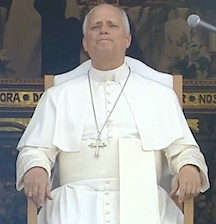
Pope Leo’s address to bishops, priests, consecrated persons,
seminarians, synod groups and pastoral councils
Chiclayo, Sanctuary of Our Lady Queen of Peace
Friday, November 13, 2026
I cordially greet all those present: priests, deacons, religious brothers and sisters, seminarians, members of synodal teams and pastoral councils, and all the brothers and sisters who have come from the parishes of the Diocese of Chiclayo and from various regions of Peru.
It seems to me that some have come here from Ecuador as well.
Welcome! I welcome you to this meeting.
Thank you for being here at this shrine dedicated to Mary, our mother, who is venerated here as Our Lady of Peace.
Dear brothers and sisters,
Coming to you today as the successor of St. Peter the Apostle, I feel an even stronger bond uniting us in Christ and in his body, the Church.
We are the people of God on a pilgrimage through history, united by the mystery of communion.
You yourselves perfectly illustrate the richness of this people through your diverse charisms and ministries.
One of the integrating dimensions of the life of the Church that Pope Francis has developed with great enthusiasm is synodality.
Synodality means walking together, listening, discerning, and sharing in the mission.
Therefore, we ask ourselves:
How can we become an ever more synodal and missionary Church?
At the root of our Christian identity is our relationship with Christ, which is rooted in baptism.
As we know, the foundation of Christian identity is baptism.
Through baptism, we have been grafted into Christ; we have become children of God, members of the Catholic Church, and participants in its mission.
Before carrying out any ministry, office, or profession, we are baptized people.
Our primary identity is as sons and daughters of God and members of His people.
As baptized individuals, we all share in Christ’s priesthood and prophetic mission. This is why the entire community shares responsibility for evangelization.
Baptism calls us to constantly listen to the Word of God, celebrate our faith, live charity, participate in the community, proclaim the Gospel, and serve the poor and excluded above all.
The first witness that Christian communities must bear is fraternal love among their members, which is a reflection of the Most Holy Trinity.
There is no mission without communion.
The communion of the Church, which makes her a sign and instrument of union with God and of the unity of the entire human race, does not imply uniformity.
Authentic communion recognizes the diversity of cultures, vocations, charisms, and ministries as a source of richness and promotes their development.
In this spirit, Church authority must be exercised as a service and as an appreciation of charisms and initiatives. The participation of the laity is not a privilege granted by others; it is an expression of their baptismal dignity.
The synodal Church shares in the joys and hopes, as well as the sorrows and anxieties, of humanity, especially the poor and suffering.
Listening to social and cultural realities, defending human dignity, and accompanying families, young people, migrants, indigenous peoples, and people living in poverty are not optional tasks, but requirements of our ecclesial mission.
“Synodality” expresses the idea of walking together on the path.
It is a constitutive dimension of the Church, showing the People of God on their journey and the assembly convened by the Risen Lord.
Brothers and sisters, I invite you to discover the beauty of being synodal communities ever more fully.
How can we do this?
By ensuring that each person contributes as a living stone to a spiritual edifice, in harmony with the diversity of vocations, gifts, and ministries, all of which are animated by the one Holy Spirit.
Synodality requires a spirituality rooted in prayer, listening to the Word, participating in Mass, adorning the Eucharist, engaging in fraternal dialogue, and engaging in community discernment.
This style of community and pastoral life must be deeply assimilated to be put into practice consistently.
While it is easy to speak of synodality, putting it into practice is challenging and requires everyone, beginning with the pastors as the first servants of the community, to examine their own attitudes and behaviors.
For dioceses and parishes to adopt a synodal style of communion, participation, and mission, it is important to revive the work of Pastoral Councils, some of which you are involved in.
Although they only have an advisory voice, they are very important for the life of the Church.
They help listen to the voice of the community, understand reality, discern priorities, and develop adequate responses.
For this reason, I encourage you to ensure that each community has its own pastoral council whose members are committed to receiving the necessary training.
Dear friends, I would like to conclude by thanking each of you for your generous dedication to the cause of the Gospel.
I encourage you to persevere in this work.
May Our Lady of Peace bless your efforts, ensuring that the Kingdom of God takes root in northern Peru and bears abundant fruit for God’s glory and the good of souls.
Now, let us return to the spirit of prayer, which is so important in our lives.
Whether we are bishops, priests, consecrated individuals, or laypeople, we must embrace this aspect of prayer to remain united with Christ.
So let us pray together using the words Jesus Himself taught us. … Our Father …